Sleep Intelligence 369 as a Guided Routine for Feasibility Research
Working paper · Released online November 4, 2026 · Not peer reviewed
Abstract
Background. The development program combines a guided wellness experience, light and digital support. Recent materials also describe a business integration hypothesis for existing spas.
Objective. To separate participant feasibility, exploratory sleep outcomes and commercial discovery.
Approach. Synthesis of the founding dossier and October B2B presentation, with staged usability and comparative feasibility work proposed.
Evidence status. A presentation reports 11 consumer interviews and nine online forms; participant-level records and instruments were not supplied for analysis. No clinical outcomes are reported.
Conclusion. The next research step is a specified routine and usable recording process, with optical exposure characterized before sleep-related claims are evaluated.
Keywords: sleep; feasibility; guided routine; self monitoring; wellness; customer discovery
Introduction
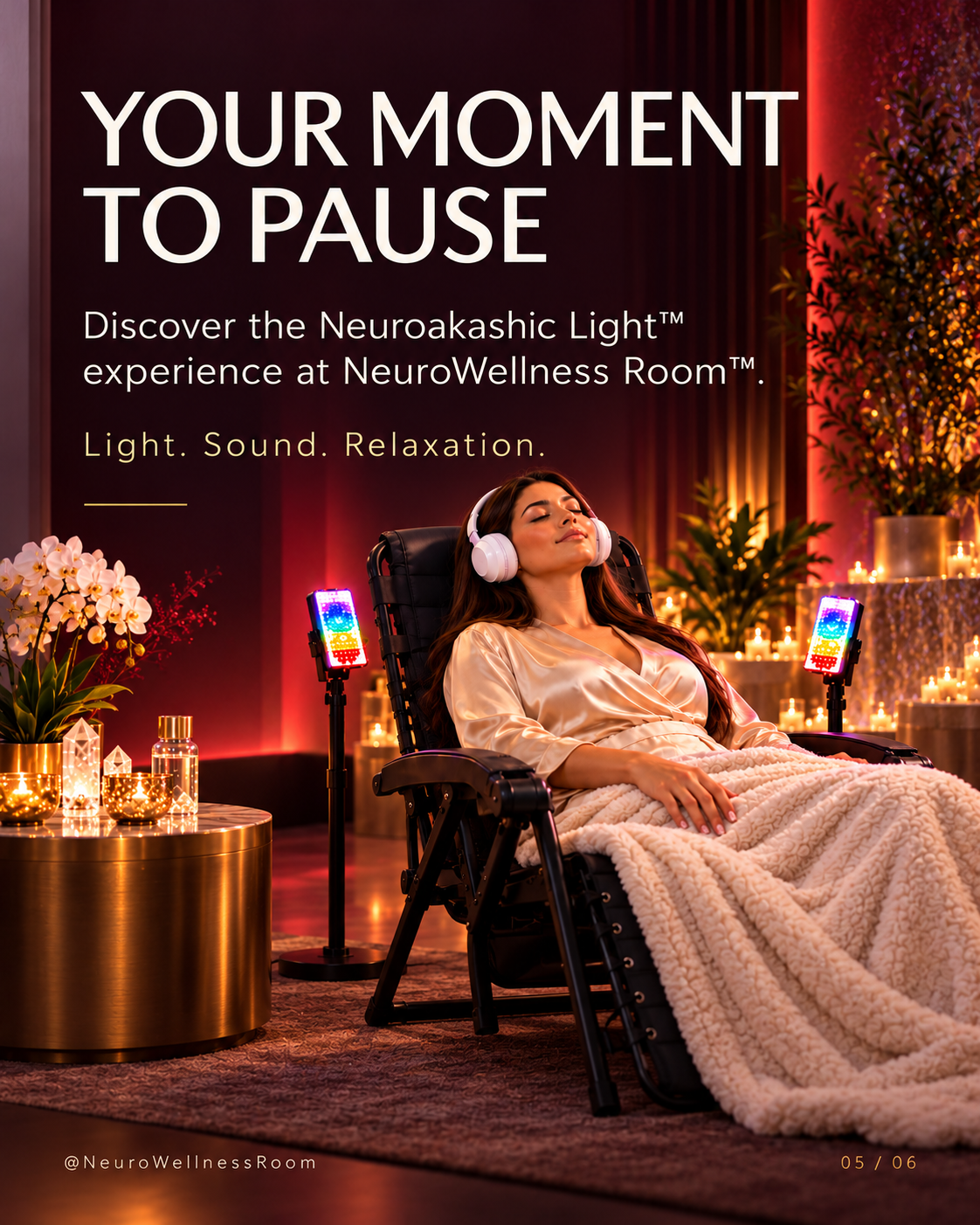
Sleep Intelligence 369 is presented as a wellness program connected to Neuroakashic Light and software support [1]. The October deck uses the variant name Sleep Intelligent 369 and focuses on NeuroWellness Room integration into independent spas and wellness centers [2]. This manuscript retains the dossier name while recording that naming discrepancy. The number 369 is a program identifier here; it does not establish a physiological mechanism, validated dose or effective session duration.
Documentary evidence
The revised deck reports 11 consumer interviews, six in the United States and five in Mexico, and nine online forms, five in the United States and four in Mexico [2]. These are document-reported counts, not an audited dataset. Original dates, recruitment records, questions, responses, consent and deduplication are needed before a customer-discovery analysis can be written. The figures are not pooled into a clinical sample and do not establish improvement in rest, recovery, energy or focus. The same deck explicitly distinguishes economic buyers from end users.
Research questions and staged design
The proposed participant question is whether a routine can be delivered consistently and recorded acceptably. Begin with usability work examining instructions, completion, burden and understanding. A later comparative feasibility study could examine retention, record completeness, withdrawals and acceptability while collecting exploratory self-reported rest. The intended population must be justified independently of the commercial target. The age and gender assumptions in a buyer slide are not automatically eligibility criteria. Sample size, duration and progression criteria remain to be specified according to the actual feasibility objective.
Intervention and recording
A reproducible session record would include guidance, audio version, duration, timing relative to intended bedtime, device identifier, verified settings, distance, ambient light and other practices. The comparator must match the question: evaluating a whole routine differs from isolating a light component. The Consensus Sleep Diary offers a published approach to prospective self-monitoring [3]. Its suitability and permissions would be checked before use; it is not reproduced or adapted in this package. Diary responses remain self-report. No wearable, electrophysiological measurement or sleep-stage classification is inferred from them.
Exposure and interpretation
Evening light may have alerting and circadian effects under particular conditions [4]. Device characterization therefore precedes claims that a light routine supports sleep. Neither the program's name nor a relaxing session establishes its sleep effects. A future analysis should report feasibility estimates, missingness and uncertainty, with exploratory outcomes identified in advance. Participant research would require complete procedures, applicable ethics review, consent, privacy arrangements and a response process for discomfort before recruitment. None of those approvals is claimed in this draft.
Commercial questions and conclusion
Owner willingness to invest, staffing, space, bookings and costs belong in a separate implementation study. The deck proposes interviewing 15-20 owners and running 3-5 demonstrations [2]; those are planned discovery activities, not completed scientific outcomes. A commercial pilot cannot substitute for an efficacy design. This paper establishes a staged route from an existing development program to a documented feasibility question while retaining the distinctions needed to interpret future findings.
Project websites
The author’s project websites, with information about the wellness concepts and services.
Authorship and disclosures
Ana Silvia Lara develops the concepts, methods and products discussed and is associated with the publisher. No participant dataset was analyzed for this draft. Proposed studies have not been conducted through this work. The author is responsible for the final work. This working paper has not undergone independent peer review.
The inaugural journal issue is planned for March 2027. This working paper was released separately in November 2026. No ISSN, DOI, indexing status or institutional endorsement is claimed.
References
- Lara AS. Neuroconsciousness Journal Editorial March 2027. English design and manuscript review proof. Version 2; November 2026. Unpublished development dossier; relevant article identified in text.
- Lara AS. Sleep Intelligent 369 NSF UCLA VIP Premium Revised Team. 11-slide B2B customer discovery presentation; October 2026. Development source, not an institutional endorsement or clinical study.
- Carney CE, Buysse DJ, Ancoli-Israel S, Edinger JD, Krystal AD, Lichstein KL, Morin CM. The consensus sleep diary: Standardizing prospective sleep self-monitoring. Sleep. 2012;35(2):287-302. https://doi.org/10.5665/sleep.1642
- Chang AM, Aeschbach D, Duffy JF, Czeisler CA. Evening use of light-emitting eReaders negatively affects sleep, circadian timing, and next-morning alertness. Proceedings of the National Academy of Sciences. 2015;112(4):1232-1237. https://doi.org/10.1073/pnas.1418490112